

Introduction
Selling a junk car involves more than agreeing on a price. If the vehicle no longer runs, has accident damage, or has been sitting unused for months, getting it to a buyer can become a problem of its own. You may not want to pay for a tow truck just to remove a vehicle you are trying to sell. That is where free junk car towing can make the process easier. Many junk car buyers offer vehicle pickup as part of the purchase, allowing the seller to arrange removal without hiring a separate towing company. The buyer coordinates the pickup, sends a tow truck or vehicle transport operator, and collects the car at an agreed location. Still, the phrase "free towing" can raise reasonable questions. Who pays for the tow? Does the service cover every vehicle? Do you need to prepare the car before the driver arrives? Can the vehicle be collected if it does not start or has missing parts? Understanding how free towing works helps you know what to expect before accepting a cash offer. It also makes it easier to compare junk car buyers, avoid unexpected costs, and prepare for a straightforward vehicle pickup.
What Does Free Towing Mean When Selling a Junk Car?
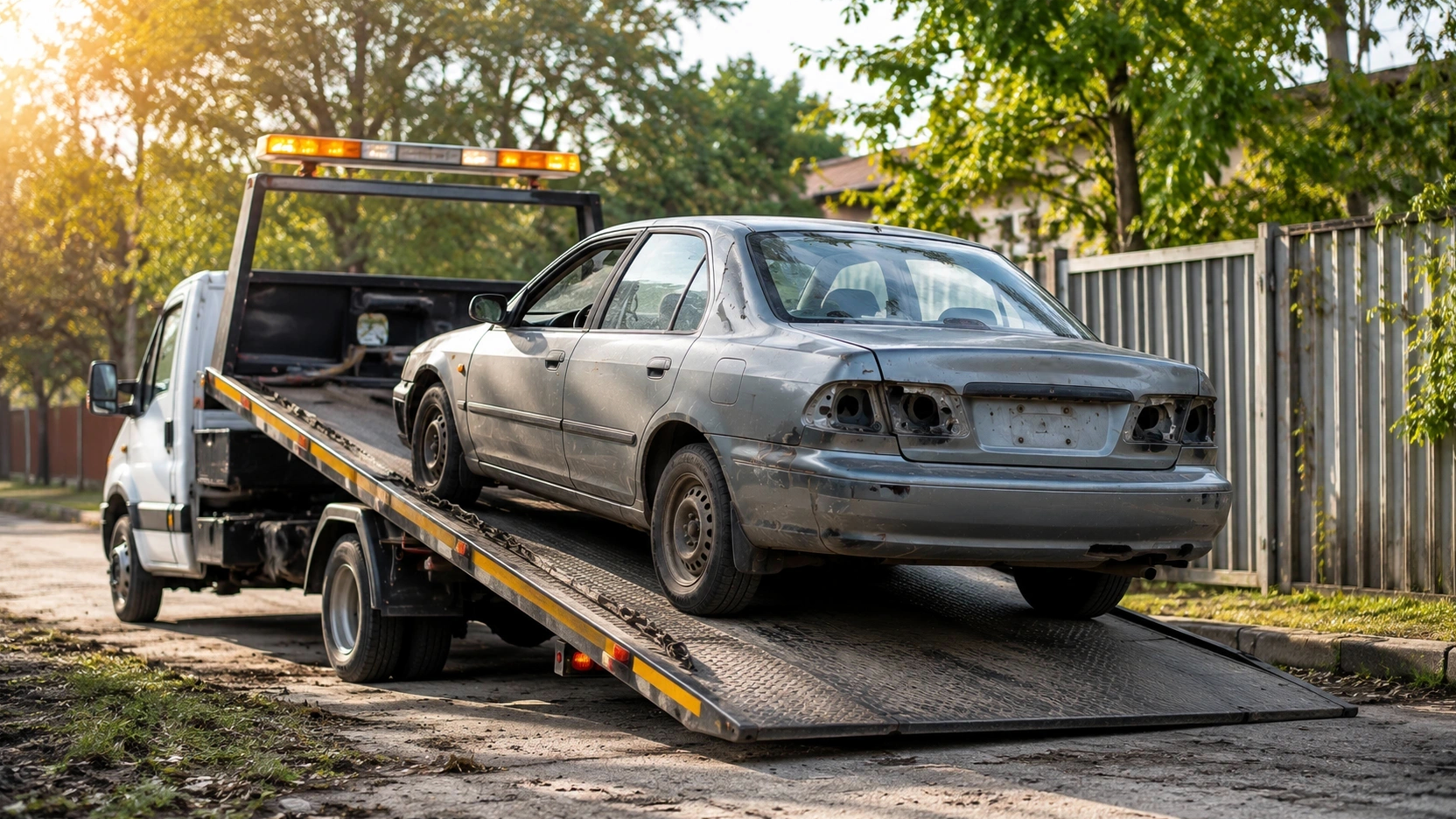
Free towing means the junk car buyer arranges to collect your vehicle without charging you a separate towing fee. Instead of requiring you to transport the car to a salvage yard or buyer's location, the company sends a tow truck or another suitable vehicle to your property or an agreed pickup point. The towing arrangement is generally connected to the vehicle purchase. The buyer is interested in acquiring the car, and collecting it is part of completing the transaction. For example, imagine you have an older sedan that has not started in several months. You receive a cash offer from a junk car buyer, but the vehicle cannot be driven to the buyer's facility. With free towing, the buyer can arrange a pickup at your home, provided the location and vehicle condition can be accommodated.
Who Pays for the Towing?
In a free towing arrangement, the buyer covers the towing expense rather than asking the seller to pay a separate removal charge. The cost may be accounted for in the buyer's overall purchasing and vehicle recovery process. This does not mean every company handles towing in the same way. Some buyers include pickup in their standard offer, while others may have conditions related to distance, access, vehicle condition, or location.
Before accepting an offer, ask the buyer to confirm:
Whether towing is completely free.
Whether there are any pickup or transportation charges.
Whether the quoted cash offer will change when the vehicle is collected.
Whether the pickup location is within the company's service area.
Whether special equipment or additional arrangements are required.
A clear answer helps prevent misunderstandings when the tow truck arrives. You can also review what no hidden fees means when selling your car for cash to understand why confirming the complete terms matters.
Does Free Towing Mean the Vehicle Must Be Completely Useless?
No. A vehicle does not necessarily have to be a total wreck to qualify for free pickup.
Junk car buyers may purchase vehicles in several conditions, including:
Cars that no longer start.
Vehicles with engine or transmission problems.
Cars damaged in accidents.
Vehicles with extensive rust or body damage.
Older cars that are expensive to repair.
Vehicles with missing or damaged components.
Cars that still run but are no longer wanted.
The buyer's interest depends on factors such as the vehicle's condition, parts, metal value, resale potential, and location. A car that still drives may also qualify for vehicle pickup if the buyer offers that service. Learn more about selling a car you no longer need.
How Does Free Junk Car Towing Work Step by Step?
The process is usually straightforward. The seller provides information about the vehicle, receives an offer, confirms the pickup arrangements, and transfers the vehicle when the tow truck arrives. Knowing what happens at each stage can help you prepare.
Step 1: Provide Basic Information About the Vehicle
The first step is contacting a junk car buyer and describing the vehicle you want to sell.
You will generally need to provide information such as:
Vehicle make and model.
Model year.
General condition.
Whether the car starts and runs.
Whether it can move under its own power.
Major mechanical or accident damage.
Approximate pickup location.
Be honest about the vehicle's condition. If the engine is seized, the tyres are flat, or the car has been sitting outside for years, mention those details. Accurate information helps the buyer determine whether the vehicle can be collected using standard towing equipment or whether a different arrangement may be necessary. For additional guidance, see what to tell a junk car buyer before requesting a quote.
Step 2: Receive a Cash Offer
After reviewing the vehicle information, the buyer may provide a cash offer.
The amount can depend on several factors, including:
Vehicle make, model, and year.
Overall condition.
Whether major components are present.
Demand for usable parts.
Scrap metal value.
Vehicle weight and material composition.
Local transportation and processing considerations.
A newer vehicle with usable components may have a different value from an older car that is primarily suitable for scrap. Ask whether the offer includes free towing. It is also helpful to confirm whether the quoted amount is subject to an in-person inspection or verification of the information you provided. You can learn more about what buyers look for during a junk vehicle evaluation.
Step 3: Agree on the Pickup Location and Time
If you accept the offer, the next step is arranging collection.
The pickup location might be:
Your home driveway.
A residential parking area.
A workplace parking lot.
A repair shop.
A private property where the vehicle is stored.
Another accessible location agreed upon with the buyer.
The buyer needs to know where the vehicle is located and whether a tow truck can reach it safely. For example, a car parked in an open driveway is usually easier to access than one stuck behind several other vehicles in a narrow garage. If the car is in a tight space, tell the buyer before scheduling pickup. Confirm the expected arrival window and make sure someone authorised to release the vehicle can be present. Pickup logistics can also depend on your area, as explained in why location within Chicago can influence towing availability.
Step 4: Prepare the Car for Pickup
You usually do not need to repair a junk car before selling it. However, a little preparation can make collection easier.
Before the driver arrives:
Remove personal belongings from the interior and trunk.
Take out documents, parking permits, and personal accessories.
Remove license plates if required by your state.
Gather the vehicle title and other relevant paperwork.
Make sure the tow truck can access the vehicle.
Tell the buyer about any changes in the vehicle's condition.
Check less obvious storage areas, including the glove compartment, centre console, door pockets, and under the seats. Personal items can easily be overlooked when a vehicle has not been used for a long time. If the car is blocked in, has flat tyres, or cannot be shifted into neutral, explain that before pickup. These details may affect how the vehicle is loaded. For more preparation advice, read how to prepare your junk vehicle for same-day pickup.
Step 5: The Tow Truck Arrives, and the Vehicle Is Checked
At the scheduled time, the towing operator arrives at the agreed location. The driver may check the vehicle's condition, confirm identifying details, and verify that the car matches the information provided when the offer was made. The operator also needs to determine how to load the vehicle safely. A running car may be driven onto suitable equipment if appropriate, while a non-running vehicle generally needs to be loaded using a winch or other towing equipment. If the vehicle is difficult to access, has missing wheels, or is severely damaged, the driver may need specialised equipment. This is why accurate information during the initial conversation matters. It helps the buyer send suitable equipment and reduces the possibility of delays. You can also read about what happens if your junk car has flat tyres or missing parts.
Step 6: Complete the Paperwork and Receive Payment
Before the vehicle leaves, the sale must be completed according to the buyer's process and applicable state requirements. The seller may need to provide the title, sign the appropriate transfer documents, and confirm ownership. If there is a lien, missing title, or ownership issue, additional steps may be necessary. Payment should be handled according to the terms agreed upon with the buyer. Confirm the amount and payment method before releasing the vehicle. Once the paperwork and payment are completed, the towing operator can load the vehicle and transport it away. For more information about the process, see how cash for junk cars works from the first call to pickup.
What Types of Vehicles Can Qualify for Free Towing?
Free junk car towing is not limited to vehicles that have completely stopped working. Buyers may collect cars in different conditions, depending on their purchasing criteria and service area.
Non-Running Cars
A non-running vehicle cannot be driven to a buyer's location. It may have a dead battery, failed engine, damaged transmission, fuel system problem, or another mechanical issue. Free towing can be especially useful for these vehicles because the owner does not need to spend money arranging separate transportation.
Accident-Damaged Vehicles
Cars involved in collisions may have damaged bumpers, doors, suspension components, frames, or other parts. Even if a vehicle can still move, it may not be safe or practical to drive. A buyer may arrange pickup using equipment appropriate for the damage. Tell the buyer if the wheels are damaged, the steering is affected, or the vehicle has other conditions that could make loading difficult.
Old and Unwanted Vehicles
Some cars remain parked for years because their owners no longer need them. Others become too expensive to maintain or repair. An older vehicle may still contain parts or materials that have value. A junk car buyer may be interested in purchasing it even if it has little practical use to the owner.
Vehicles That Still Run
A car does not have to be classified as junk in the everyday sense to be eligible for a purchase. Some buyers purchase older or unwanted running vehicles because they may have resale value beyond their scrap metal content. The vehicle's age, mileage, condition, and market demand can influence the offer.
What Can Affect the Cost or Availability of Free Towing?
Although a buyer may advertise free towing, the pickup arrangement can depend on practical details. Asking about these factors before scheduling helps you understand what the service includes.
Distance From the Buyer's Service Area
A buyer may offer free pickup throughout a defined service area. A vehicle located far outside that area may require a different arrangement. For sellers in Chicago, its surrounding suburbs, and Northwest Indiana, it is useful to provide the exact pickup location when requesting an offer. Do not assume that a company serving Chicago automatically covers every nearby town. Confirm your specific location.
Vehicle Accessibility
The tow truck must be able to reach and load the vehicle.
Pickup can become more complicated when a car is:
Parked in a narrow alley.
Inside a low-clearance garage.
Behind other vehicles.
On soft ground or uneven terrain.
In a crowded parking area.
Blocked by debris or other obstacles.
Explain these conditions when arranging the pickup. The buyer can then determine whether the location is accessible or whether another plan is needed.
Vehicle Condition and Missing Components
A vehicle with all four wheels and intact steering may be easier to load than one with missing wheels, damaged suspension, or severe structural damage. A car that cannot roll may require special loading methods. If the vehicle has been stripped for parts, disclose which components are missing. The goal is not to make the car look better than it is. It is to help the buyer understand what equipment and time may be needed.
Special Towing Requirements
Not every vehicle can be handled in the same way. Some situations may require a flatbed, winch, wheel dollies, or other recovery equipment. Ask whether the buyer can accommodate the vehicle's condition and whether the quoted pickup remains free if special equipment is needed. A clear agreement is better than discovering a problem after the tow truck has arrived.
Why Free Pickup Can Be More Practical
If the vehicle is not running, paying for a separate tow can reduce the money you receive from selling it. For example, imagine you receive a cash offer for an old vehicle but must pay another company to transport it. Your actual proceeds would be the offer minus the towing expense. When the buyer includes free pickup, you avoid that separate expense, assuming the agreed terms cover your location and vehicle condition. Free towing also reduces the number of arrangements you need to manage. Instead of finding a towing company, choosing a destination, and coordinating delivery, you can work directly with the vehicle buyer. Learn more about how local junk car pickup makes selling an unwanted vehicle easier.
Does Free Towing Always Mean the Best Offer?
Not necessarily. A buyer advertising free towing may offer less for the vehicle than another buyer that charges separately for pickup. The best comparison is the amount you actually receive after all agreed costs.
Ask each buyer for a clear breakdown of:
The vehicle purchase amount.
Whether towing is included.
Any additional charges.
Payment method and timing.
Conditions that could change the offer.
Compare the final amount rather than focusing only on the word "free." These questions to ask before accepting a cash offer can help you understand the agreement.
What Documents Should You Prepare Before the Tow Truck Arrives?
Vehicle ownership and transfer requirements matter just as much as transportation. Having the right documents ready can help prevent delays.
Vehicle Title
The title is an important document showing legal ownership. In many ordinary vehicle sales, the seller must properly transfer the title to the buyer. Check that the ownership information is accurate and that the document is available before scheduling pickup. If you cannot find the title, ask the buyer what options may be available. Replacement title procedures depend on the state and the vehicle's circumstances. You can also review what documentation is needed when selling a junk vehicle in Chicago.
Identification
A buyer may request identification to verify that the person selling the vehicle is authorised to do so. The name and ownership details should be consistent with the paperwork. If someone is selling the vehicle on behalf of another owner, ask what authorisation documents are required.
License Plates and Registration
License plate handling depends on state rules and the circumstances of the sale. In Illinois and Indiana, sellers should check the relevant state motor vehicle agency guidance for title transfer, plate removal, and any required notification or registration steps. Do not assume that the tow truck operator automatically completes every responsibility associated with ending vehicle ownership.
What If There Is a Loan or Lien?
If the vehicle still has an outstanding loan or lien, the sale may require additional steps. A seller should not assume that a junk car buyer can accept the vehicle as a clear-title purchase without resolving the ownership interest. Contact the lender and buyer to understand what documentation and payoff arrangements are needed.
Common Misconceptions About Free Junk Car Towing
Misunderstandings about vehicle removal can lead to confusion. Here are several assumptions worth checking before arranging pickup.
"The Car Must Start Before It Can Be Towed"
This is not true. Non-running vehicles are commonly collected using towing equipment designed to load cars that cannot drive. The buyer simply needs accurate information about the vehicle's condition so the appropriate equipment can be arranged.
"I Have to Repair the Vehicle First"
You generally do not need to repair a car before requesting a junk car offer. Buyers may purchase vehicles with mechanical problems, accident damage, or significant wear. However, the vehicle's condition can affect its value. Describe any major issues honestly rather than spending money on repairs without first finding out whether they are necessary. For more perspective, read whether it is worth fixing an old truck before selling it for scrap.
"Free Towing Means There Can Never Be Any Conditions"
Free pickup still depends on the agreed service area, vehicle accessibility, and the buyer's terms. A company may need to review unusual situations, such as a vehicle stuck in a ditch or one located in an inaccessible garage. Ask about special circumstances before confirming the sale.
"The Tow Truck Driver Will Handle All the Paperwork"
The driver may help complete the pickup process, but sellers remain responsible for understanding the ownership transfer requirements that apply to them. Prepare the required documents, keep copies or records where appropriate, and verify that the sale is properly completed.
How to Prepare for a Smooth Junk Car Pickup
A little planning can make the removal process easier for everyone involved.
Confirm the Final Offer
Before the tow truck is dispatched, confirm the purchase amount and whether it includes towing. Ask what could cause the offer to change. If the buyer needs to inspect the vehicle before finalising the amount, understand that process in advance.
Describe the Vehicle Honestly
Mention damage, missing parts, flat tyres, mechanical problems, and anything that affects movement or access. A clear description helps prevent disagreements at pickup and allows the buyer to plan the collection properly.
Clear the Pickup Area
Move other vehicles, remove loose obstacles, and make sure the tow truck can reach the car. If the vehicle is in a shared parking area, check whether permission or coordination with property management is needed.
Remove Personal Belongings
Check the entire vehicle before the driver arrives. Remember to remove personal documents, electronics, toll devices, garage openers, and anything else you want to keep. Once the vehicle has been collected, recovering forgotten items may be difficult.
Keep a Record of the Transaction
Keep the relevant sale paperwork, payment confirmation, and any transfer documentation. These records can help establish when the vehicle changed ownership. Follow the applicable state requirements for reporting the sale and handling the license plates. For a more detailed preparation guide, see the junk car selling checklist for Chicago drivers.
Selling a Junk Car With Free Pickup in Chicago and Northwest Indiana
Vehicle pickup arrangements are particularly useful for owners who have an unwanted car sitting at home, at a repair shop, or on another property. A Cash 4 Junk Cars serves the Chicago metropolitan area, surrounding suburbs, and Northwest Indiana, including Griffith, Indiana. The company buys vehicles in different conditions, including old, damaged, wrecked, non-running, and drivable cars. For someone selling an unwanted vehicle, the process starts with sharing accurate information and confirming the offer and pickup arrangements. Before scheduling, provide the vehicle's location and explain whether it starts, rolls, or has any unusual access issues. It is also sensible to confirm that towing is included in the agreed terms and that there are no separate pickup charges. Clear communication helps both the seller and buyer understand what will happen on collection day.
Conclusion
Free towing can remove one of the biggest obstacles involved in selling a junk car: getting a vehicle that may no longer run to the buyer. Instead of paying for a separate tow truck, the seller can arrange pickup through a buyer that includes vehicle removal as part of the purchase. The process generally involves providing vehicle details, receiving an offer, confirming the pickup location, preparing the required paperwork, and completing the sale when the driver arrives. The vehicle's condition, accessibility, distance, and documentation can all affect how the pickup is arranged. Before agreeing to a sale, confirm that towing is included, ask about possible exceptions, and understand the final payment terms. Prepare the title and remove personal belongings before collection. For vehicle owners in Chicago, its surrounding suburbs, and Northwest Indiana, understanding these steps makes it easier to compare junk car buyers and arrange removal with fewer surprises. A well-planned pickup helps turn an unwanted vehicle into a completed sale without the extra work of organising transportation separately.
Frequently Asked Questions
1. Is towing really free when you sell a junk car?
It can be. Many junk car buyers include vehicle pickup in the purchase arrangement and cover the towing expense. However, the seller should confirm that pickup is free for the specific location and vehicle condition before accepting the offer.
2. Do I need to drive my junk car to the buyer?
Usually not if the buyer offers free vehicle pickup. The company can arrange a tow truck to collect the car from an agreed location. This is particularly useful for vehicles that do not start or are unsafe to drive.
3. Can a junk car be towed if it does not start?
Yes. Non-running vehicles can generally be collected using suitable towing equipment. The buyer should know whether the engine starts, whether the wheels roll, and whether the vehicle can be shifted into neutral before arranging pickup.
4. How long does it take to arrange free junk car towing?
The timing depends on the buyer's schedule, location, vehicle condition, and equipment availability. Ask about the available pickup window when accepting the offer rather than assuming collection will happen immediately.
5. Does free towing reduce the cash offer for my vehicle?
Not necessarily. Some buyers include towing in their standard purchase arrangement. Compare the final amount you will receive after any agreed expenses rather than judging an offer by its advertised price alone.
6. Can I get free towing for an accident-damaged car?
A buyer may offer pickup for accident-damaged vehicles, including cars with significant body or mechanical damage. However, the type of damage can affect the equipment needed. Describe the condition accurately before scheduling.
7. Do I need the title to sell a junk car?
A title is commonly required to establish ownership and complete a vehicle transfer. Requirements and available alternatives vary by state and individual circumstances. Contact the buyer and the relevant motor vehicle agency if the title is missing or there is a lien.
8. Should I remove my license plates before the vehicle is picked up?
License plate requirements depend on the state. Check the applicable Illinois or Indiana rules before the sale, and ask the buyer about its paperwork process. Do not assume the towing operator will handle every plate-related responsibility.
9. Can a junk car be picked up from a private driveway or repair shop?
Pickup may be possible from a driveway, repair shop, or another agreed location, provided the buyer can access the vehicle and has permission to remove it. Explain any parking restrictions, access limitations, or property requirements in advance.
10. What should I do before a junk car tow truck arrives?
Remove personal belongings, gather the title and required documents, confirm the agreed payment and towing terms, and make sure the vehicle is accessible. Tell the buyer about flat tyres, missing parts, or other conditions that could affect loading.
